

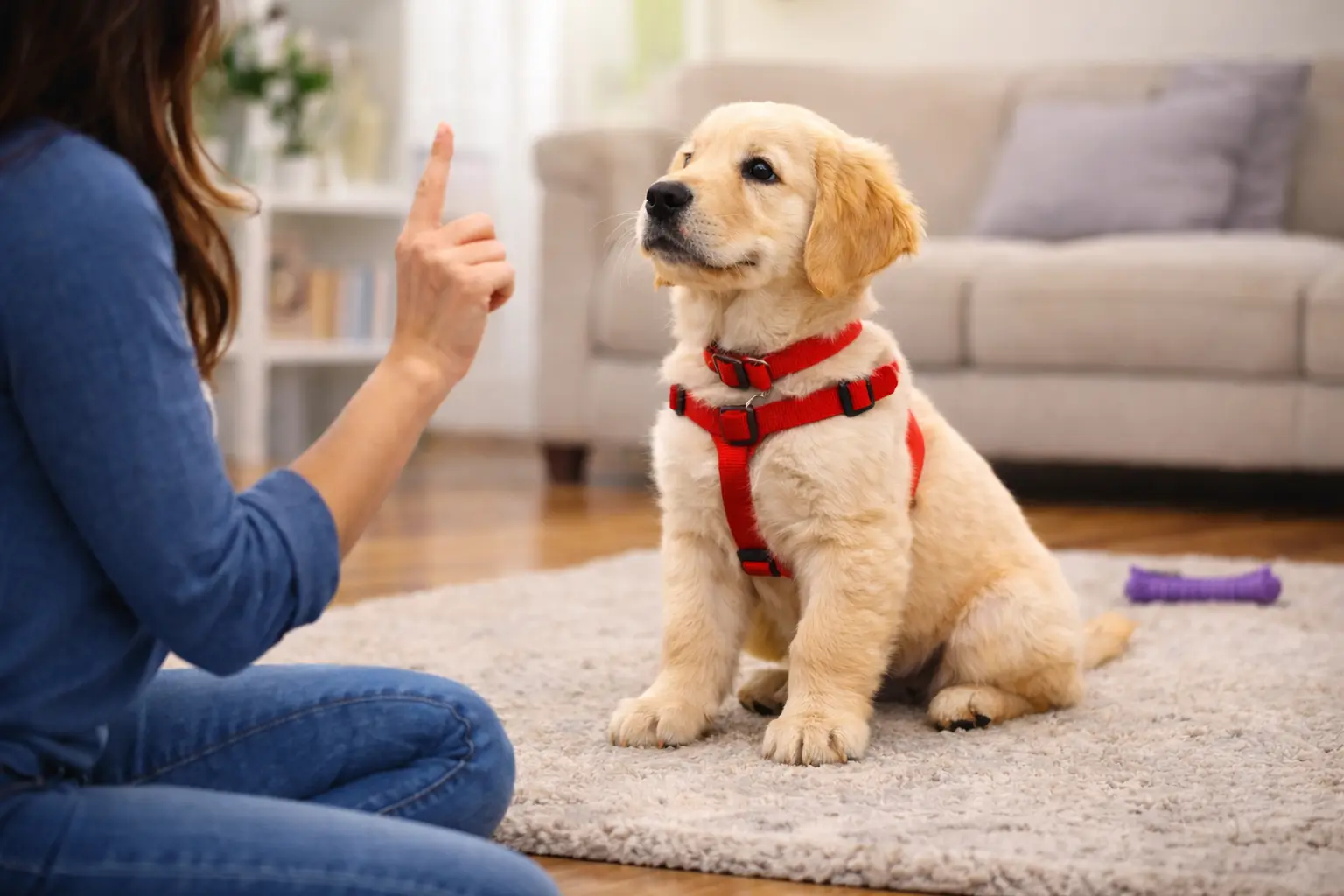
So, you’ve just got a puppy — congratulations! Now comes the fun (and slightly chaotic) part: training.
If you’re wondering how to train a puppy at home without hiring a professional trainer, the good news is this: you absolutely can. With consistency, patience, and the right structure, you can raise a confident, well-behaved dog right from your living room.
Let’s walk through it step by step.
Step 1: Prepare Your Home Before Training Begins
Before you teach commands, you need to set up the environment.
A common mistake new owners make is giving puppies full access to the house immediately. That usually leads to accidents and chewing disasters.
Instead:
Use a crate or playpen
Remove shoes, wires, and small objects
Provide safe chew toys
Supervise closely
A structured environment makes training easier and reduces stress for both of you.
Step 2: Start Potty Training Immediately
Potty training should begin on day one.
Puppies don’t instinctively know where to go — you have to teach them.
Take your puppy outside:
First thing in the morning
- After meals
- After naps
- After playtime
- Before bedtime
Always use the same spot and reward immediately after they finish.
Consistency builds understanding.
If accidents happen (and they will), avoid punishment. Clean thoroughly and stick to your routine.
Most puppies become reliable within 4–6 months.
Step 3: Teach Basic Commands That Build Communication
Once potty habits improve, begin basic obedience training.
Start with these essential commands:
Sit
The foundation command. Hold a treat above your puppy’s nose and move it slightly backward. When their bottom touches the ground, say “Sit” and reward.
Stay
Ask your puppy to sit. Hold your palm out and say “Stay.” Take one small step back and reward if they remain in position.
Come
This is crucial for safety. Call their name with excitement and reward heavily when they come to you.
Leave It
This prevents chewing dangerous or unwanted objects. Reward your puppy for ignoring the item.
Keep sessions short — 5 to 10 minutes. Puppies learn best in small bursts.

“Today’s tiny paw prints become tomorrow’s loyal companion — training builds that bond.”
Step 4: Handle Biting and Chewing Early
Puppy biting is normal. It’s how they explore the world.
But boundaries are important.
If your puppy bites:
- Say “Ouch” firmly
- Stop play immediately
- Redirect to a chew toy
- Praise when they chew the toy instead
This teaches them what’s acceptable — without creating fear.
Step 5: Socialize Your Puppy Early
Between 8 and 16 weeks is a critical learning window.
Expose your puppy safely to:
- Different people
- Friendly vaccinated dogs
- New environments
- Everyday sounds
Positive experiences now prevent fear and anxiety later.
Socialization shapes your puppy’s confidence for life.
Step 6: Create a Daily Training Routine
Dogs thrive on routine.
A simple daily schedule might look like:
Morning
- Potty break
- Short training session
- Breakfast
Afternoon
- Playtime
- Social exposure
- Potty break
Evening
- Quick training refresh
- Calm bonding time
- Final potty break
Predictability builds security — and security improves behavior.
Common Puppy Training Mistakes to Avoid
Many new dog owners struggle because they:
- Change rules daily
- Train for too long
- Expect fast results
- Skip socialization
- Use punishment instead of guidance
Remember, training takes weeks — not days.
Be patient. Progress builds gradually.
How Long Does It Take to Train a Puppy?
Basic obedience typically takes 4–8 weeks with consistent practice.
Full maturity can take up to a year.
Training is not about perfection — it’s about steady improvement.
Final Thoughts
Training a puppy at home isn’t about strict discipline. It’s about building communication, trust, and structure.
There will be frustrating days. There will also be proud moments when your puppy sits calmly instead of jumping or comes when called for the first time.
Stick with it. The effort you put in today creates the well-behaved, confident dog you’ll enjoy for years.